With its approximately 2850 kilometers, the Danube is the proud second-longest river in Europe! It has now been accompanied by the Danube Cycle Route for around 40 years. The cycle path was one of the first long-distance cycle routes to attract tourists from home and abroad. And to this day, the route is considered the most popular in all of Europe.
The Danube Cycle Route is good for several holidays. You can really get to know the diversity between the Black Forest and the Black Sea if you have plenty of time. Whether you choose to cycle part of the German section or the most famous route from Passau to Vienna, each section stands out with its own special features and peculiarities.
On the following pages, you will find the most important information about the individual sections of the Danube Cycle Route. This includes information on signposting, interesting facts about the topography, possible shortcuts, and much more. And if you would rather concentrate on cycling, then take a look at our bookable cycling tours on the Danube: you cycle, we take care of the rest!
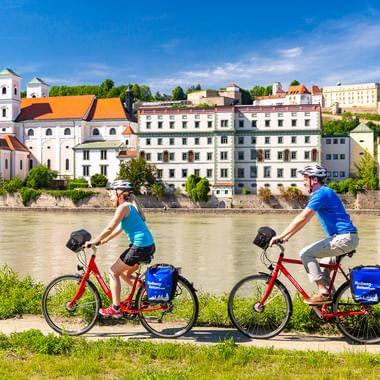
Cyclists near Passau
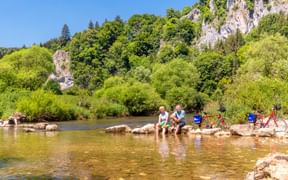
On the Danube Cycle Route
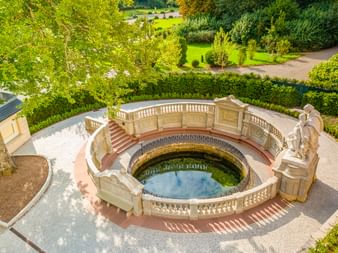
The source of the Danube in Donaueschingen
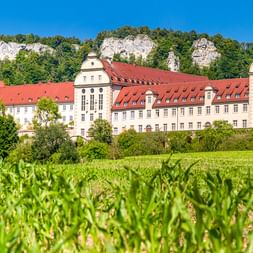
Beuron Abbey
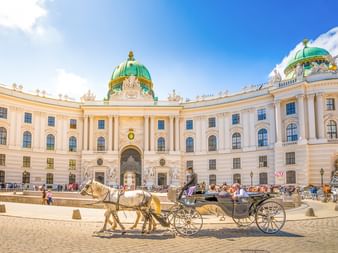
The Old Hofburg in Vienna
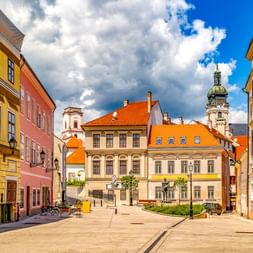
The Old Town of Győr
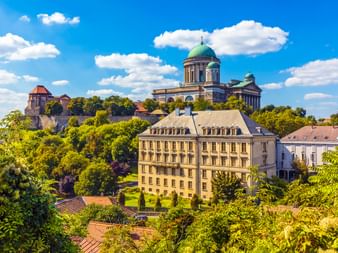
The Basilica in Esztergom
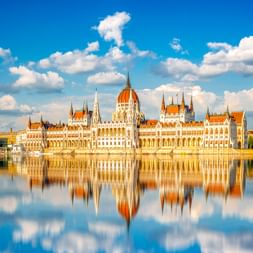
The Parliament in Budapest
The classics on the Danube Cycle Route
Short & simple: The Danube Cycle Route
- Length
Germany: approx. 600 km
Passau - Vienna: approx. 320 km
Vienna - Budapest: approx. 300 km - Topography
Germany: medium
Passau – Vienna: easy
Vienna – Budapest: medium - Signposting
The Danube passes through ten European countries. The standard of cycle route signage varies in these countries. In Germany and Austria, the Danube Cycle Route is uncomplicated to find and is signposted in an exemplary manner.
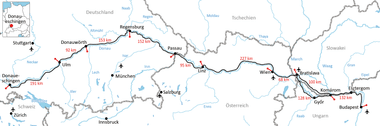
Map - The Danube Cycle Route
Worth knowing
The Danube Cycle Route is part of the European long-distance route Eurovelo 6, which connects the Atlantic coast with the Black Sea. You will also find the corresponding symbol, a wheel with the appropriate lettering, and the European flag on many of the Danube Cycle Route signs. You will always meet someone on the way who declares the exact section you are on to be the most beautiful section on the Danube Cycle Path. But to decide that for yourself, you would have to cycle from Donaueschingen to Budapest and on to the Black Sea. The cycle path follows the Danube the entire way, which means over 2850 kilometers across Europe.
The first half of the Danube Cycle Route is particularly well-maintained and busy: the German and Austrian sections are both among the most popular cycle routes in Europe.
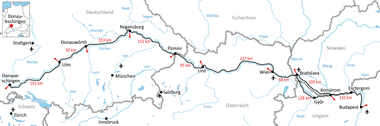
Route of the Danube Cycle Path
Length and distances
On the Danube Cycle Route in Germany, you will cover around 600 kilometers. You will cycle through southern Germany almost completely from west to east. The best-known section from Passau to Vienna is around 320 kilometers, followed by another 300 kilometers from Vienna to Budapest. If you want to cycle from Donaueschingen to Budapest, you will cycle over 1200 kilometers!
However, the total length says little about the length of the stages. The Danube Cycle Route is densely populated, and every day you pass through a wide variety of small and large towns. So you can make your stages as short and relaxed or longer and more challenging as you like.
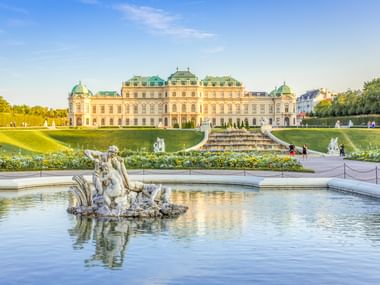
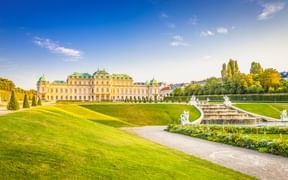
Belvedere Palace in Vienna
Cycle routes
Just like the landscape you get to know on the way, the Danube Cycle Route naturally changes its shape again and again in the course of the journey. However, it runs almost continuously along the river. Some stretches are developed on both sides, some only on one side of the Danube. The cycle path rarely moves far from the Danube, should you ever leave the river.
Most of the time you cycle on asphalt roads and paved fields and forest paths. If the cycle path is not reserved for cyclists alone, you will only have to share the road with very few vehicles. Once the Danube has grown a little in size, the Danube Cycle Route follows historic towpaths. On these riverside paths, boatmen and their horses once pulled their wooden boats upstream. So the cycle path is directly on the riverbank and is particularly beautiful to cycle along.
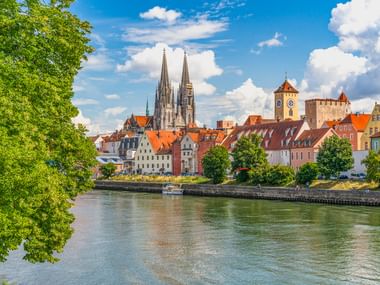
The Danube near Regensburg
From west to east or from east to west?
Most cycle tourists follow the Danube in the direction of flow from west to east. Accompanying the Danube on its way from a young, bubbling river to a mighty stream has a special charm. In Austria, you are likely to enjoy a constant tailwind as you head towards Vienna. And you will be even faster on your way.
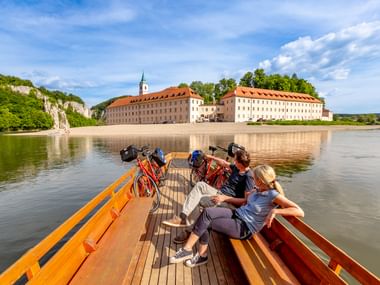
Boat trip on the Danube Gorge near Weltenburg
Topography
On the main route of the Danube Cycle Route, you can expect hardly any gradients. After all, you cycle next to or near the river most of the time. This is not the only reason why it is popular with both relaxed and sporty cyclists. After all, you can spend pleasantly relaxed stages on the flat paths as well as enjoy high mileage at the end of the day. Only if you are planning excursions into the surrounding countryside should you be prepared for more strenuous climbs. After all, the Swabian Alb or the Wachau are not known for their flat landscape.
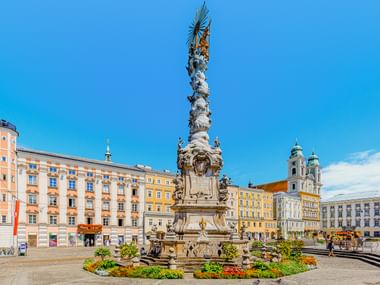
The Holy Trinity Column in Linz
Frequently asked questions about the Danube Cycle Route
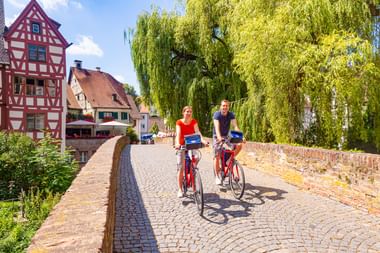
The Danube Cycle Route from Passau to Vienna
The Danube Cycle Route between Passau and Vienna is one of the most popular cycling tours in the whole of Europe! Schlögener Loop, Linz, the Wachau, Melk, and last but not least Vienna, no wonder the Danube Cycle Route magically attracts so many cyclists year after year.