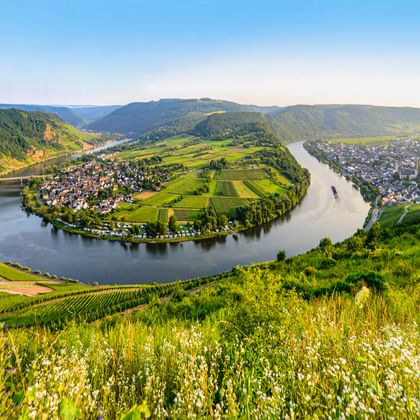
The Moselle Cycle Route begins in Metz, France, and ends in Koblenz, Rhineland-Palatinate. In between, the 310-kilometer cycle path winds its way through the foothills of the Eifel and the Hunsrück - always along the river that gives it its name. The route is definitely international. The Moselle rises in the French Vosges, passes through the Grand Duchy of Luxembourg, and flows into the Rhine at the Deutsches Eck after about 550 kilometers.
On this page, you can find out more about the course of the Moselle Cycle Route, its topography, signposting, how to get there, and the ideal time to travel. Selected cycling holidays along the Moselle included! You cycle past seemingly endless vineyards and to romantic winegrowers' farms. You will discover lovely places like the French town of Thionville, Germany's oldest city – Treves, the wine-growing town of Traben-Trarbach, and Eltz Castle near Treis-Karden. Thanks to the Romans and its protected location, the Moselle Valley developed into a typical wine region. Cycle through one of the largest wine-growing areas in Germany on the Moselle Cycle Route. Stop off at one of the many wine taverns along the way, because "there must always be time for a glass of wine" is the motto of the Mosel people. On the Moselle Cycle Route, experience the over two-thousand-year history of a region that is reflected in numerous contemporary witnesses such as Roman buildings, castles, palaces, and industrial monuments.
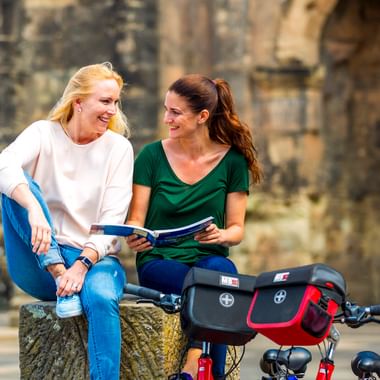
Cyclists in front of the Porta Nigra in Trier
On the Moselle Cycle Route
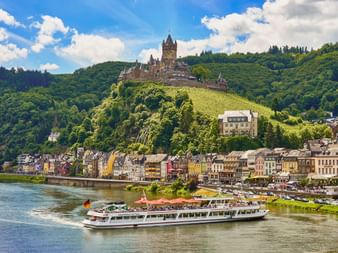
The Moselle near Cochem
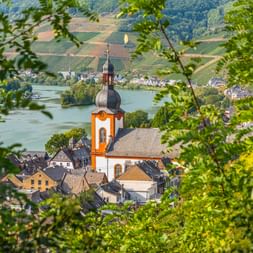
Zell on the Moselle
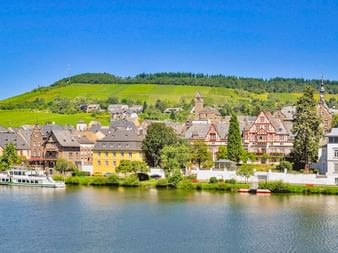
The Moselle near Traben-Trarbach
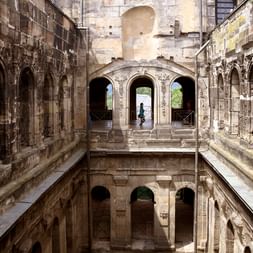
The Porta Nigra in Trier
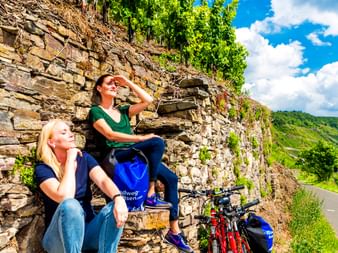
A break from cycling in the vineyards at Neef
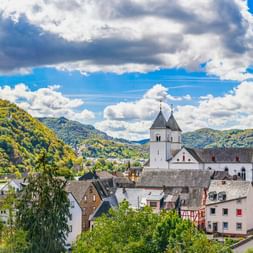
St Castor in Treis-Karden
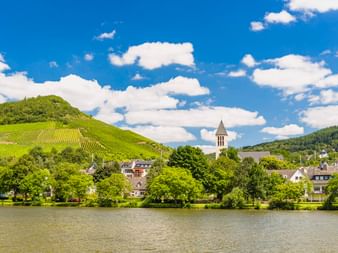
Bullay on the Moselle
Our bestseller tours on the Moselle
On the way from Metz to the estuary in Koblenz
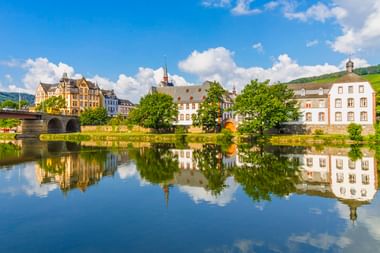
The Moselle Cycle Route begins in the heart of the small French town of Metz. Always close to the river, you cycle towards the French-German border. In the municipality of Perl, you have reached German soil. A few kilometers further northeast, the Moselle Cycle Route takes you directly past the famous Porta Nigra in Treves. Our classic route along the Moselle runs from Treves to Koblenz. Following the twists and turns of the Moselle, the cycle route takes you through the wine villages of Piesport and Neumagen-Dhron. Visit the ruins of Landshut Castle in the half-timbered town of Bernkastel-Kues and taste the Moselle wine Kröver Nacktarsch in the winegrowing village of Kröv. Situated on both sides of the Moselle, you cycle through the twin town of Traben-Trarbach. Let the hundreds of thousands of vines in Zell pass you by and enjoy the view of the Moselle Valley from Reichsburg Castle in Cochem. The Mosel Cathedral in Treis-Karden is considered the most important church on the Lower Mosel. Eltz Castle, not far from the town, is one of the most famous castles in Germany. The Moselle Cycle Route ends in Koblenz, at the famous Deutsches Eck, an artificially raised promontory at the mouth of the Moselle into the Rhine.
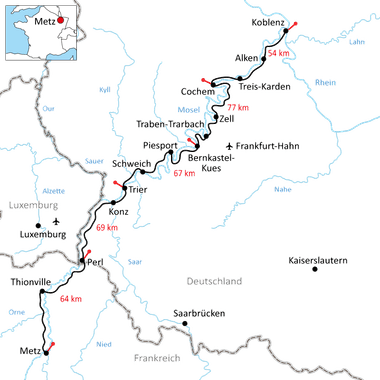
Route of the Moselle Cycle Route
Short & simple: The Moselle Cycle Route
- Length
approx. 310 km - Topography
The Moselle Cycle Route enjoys the reputation of being an almost flat cycle path. You cycle gradually and imperceptibly downhill between Metz and Koblenz. Short, steep climbs, such as at bridge approaches, are rare between Treves and Koblenz, but possible. - Signposting
The Moselle Cycle Route is signposted throughout, mostly with the green and white Moselle logo. - Quality
The Moselle Cycle Route runs almost exclusively on asphalt cycle paths, low-traffic roads, and cycle lanes. Rarely, and especially in the nature reserves, you will find unpaved or poorly passable sections. In numerous places, you have the opportunity to change banks by bridge or ferry.
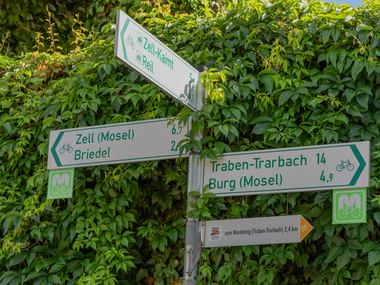
Signposts along the Moselle Cycle Route
Travel time
It is not only the winegrowers who appreciate the mild and sunny climate along the Moselle. Year after year, our guests on the Moselle Cycle Route also enjoy the warm temperatures and the many hours of sunshine. The sheltered location of the Moselle Cycle Route not only allows wine to thrive, from March onwards you can already sit on the saddle in relatively mild temperatures. Numerous sunny days are not uncommon until the end of October. The deep red and golden yellow coloring of the vineyards and the still young wine make late summer and early autumn the most popular time to travel along the Moselle Cycle Route. The colorful landscape, the wine villages decorated for harvest time and the numerous wine festivals are a very special experience that attracts many guests. Our travel tips: The Moselle Wine Tour from Treves to Koblenz and the Saar and Moselle Cycle Route from Saarbrücken. From our experience, hotels and inns book up quickly from the end of August to mid-October, so book as early as possible.
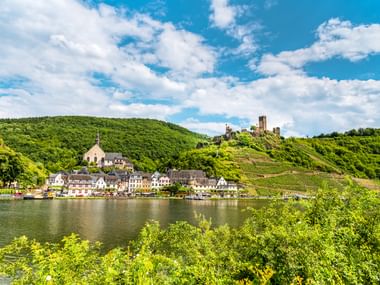
Metternich Castle in Beilnstein
Arrival
If you intend to cycle the Moselle Cycle Route with your own bike, we advise you to arrive by car or train. All major towns along the Moselle are connected to the motorway and federal road network, as well as to the regional transport system of the Deutsche Bahn. Please enquire in advance whether it is possible to take bicycles on your chosen connection. If you have a long journey and have booked a rental bike, we recommend using the airports Frankfurt am Main, Frankfurt-Hahn, and Luxembourg in addition to the car and train. The cities of Koblenz, Treves, and Metz are connected to the long-distance bus network.
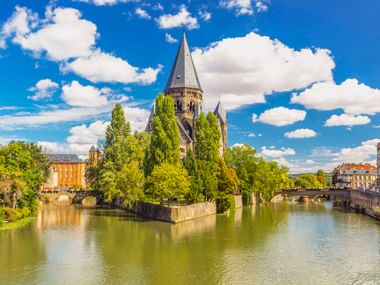
Le Temple Neuf in Metz
Shortcuts
If you want to shorten a stage on the Moselle Cycle Route due to an unforeseen breakdown or a sudden change in the weather, use the railway or one of the transport boats on the Moselle. Between Metz and Treves and between Traben-Trarbach and Koblenz, the railway line runs not far from the banks of the Moselle. Between Treves and Traben-Trarbach, the line runs a few kilometers away from the river. Easier and more pleasant is the offer of the RegioRadler Moseltal: Between Treves and Bullay you have the possibility to use a bus line including a bicycle trailer. In the summer months, you can also interrupt your stages with a short boat trip on the Moselle. Simply enquire locally whether a boat trip on the Moselle to your next stage destination is possible. For those who generally enjoy traveling by boat, we recommend a cycle and boat trip on the Moselle and Saar!
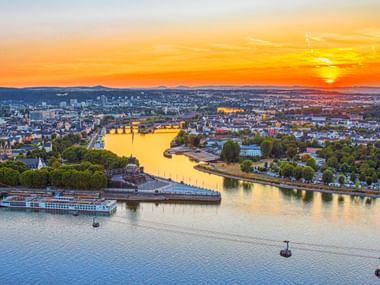
The Deutsches Eck in Koblenz
Who is the Moselle Cycle Route suitable for?
Of course, wine lovers especially appreciate the Moselle Cycle Route. Hardly any other cycle route offers so many opportunities to taste the fine wines amidst the sunny vineyards. Delicious regional dishes pick up on the wine: Epicures reward themselves after the stage with a Riesling cream soup or a wine pudding.
Culture and history enthusiasts are attracted by the numerous Roman buildings, and nature lovers by the vastness of the Moselle region. On the mostly flat, quiet cycle paths, families can let their children cycle by themselves in a relaxed manner or take them along in a child trailer without any problems. It is up to you how many kilometers you want to cycle per stage. The cycle path is therefore equally suitable for beginners and sporty cyclists.
The cycle path is also suitable for racing cyclists. As there can be heavy cycling traffic in the summer months and on Sundays and public holidays, use detours via smaller side roads, for example through the vineyards.
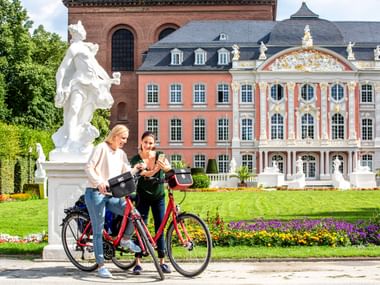
Cyclists in the Palace Gardens in Trier
Frequently asked questions about the Moselle Cycle Route