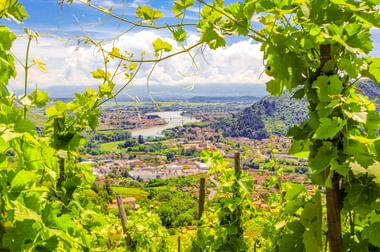
The Rhône Cycle Route takes you on an impressive journey from the imposing mountain scenery of the Gotthard massif to the Mediterranean. The Rhône is the most important river in western Switzerland and the river with the most water in France. First, the journey takes you westward through the Valais and Goms to Lake Geneva. The Mediterranean-like Lake Geneva with its adjacent cities such as Vevey, Montreux, Lausanne, Nyon and Geneva marks the end of the first section on the Rhône Cycle Route.
At a scenically impressive narrows now begins the second, the French part of the Rhône Valley. The Rhône Cycle Route now leads you as the newly signposted Via Rhôna all the way to the Camargue. Already in the times of the Roman Empire, the river was an important transport and trade route. The home of the popular white nougat with lavender honey and almonds is on the route, as is Avignon with its much-sung-about bridge. In Arles, the Rhône divides into two arms, the Grand Rhône and the Petit Rhône. Together with many smaller tributaries they form the Rhône delta, the Camargue.
Learn more about the Rhône bike path, its topography and signage on this page. We also give you tips on how to get there, the ideal time to travel and shortcuts along the bike path. You'll also find the most popular cycling tours along the Rhône – you cycle, we take care of the rest, from hotel bookings to luggage transport.
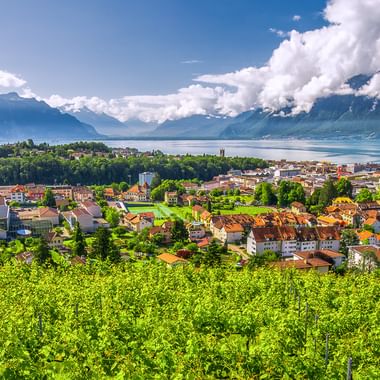
View of Montreux
On the Rhône Cycle Route
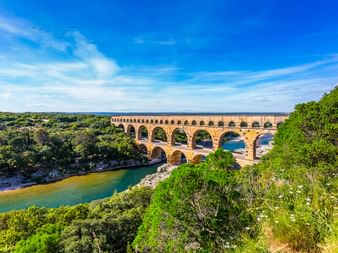
The Pont du Gard near Remoulins
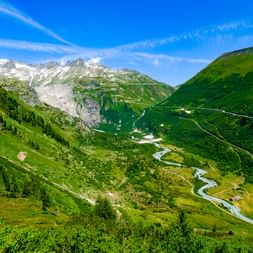
The Grimsel Pass
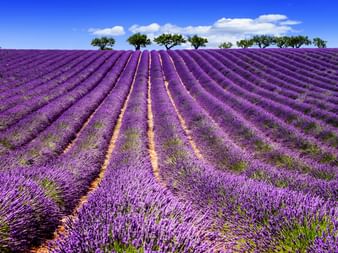
Lavender fields in Provence

Weekly market in the south of France
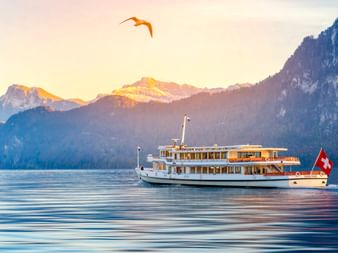
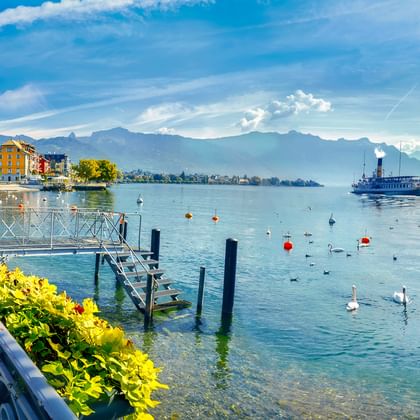
A boat on Lake Geneva
Our cycling tours along the Rhône
On the Rhône Cycle Route from Andermatt to the Mediterranean Sea
The Rhône Cycle Route from Andermatt to Geneva is the most famous and popular cycling route in Switzerland. From Geneva, the Via Rhôna, the French section of the Rhône Cycle Path, takes over and leads its visitors through the famous lavender fields of Provence to the magnificent beaches of the Mediterranean. A variety of landscapes await you, just waiting to be explored by bike.
On the first 320 kilometers along the Rhône Cycle Route, you can look forward not only to the Furka Pass, one of the highest Alpine passes in Switzerland, and the sun-drenched Valais. Equally spectacular are the high valley of Goms with its typical houses made of larch wood and the numerous ornate baroque churches and the world-famous cities such as Montreux, Lausanne and Geneva. The scenic highlight is Lake Geneva with its glistening waters. Along the Rhône Route in Switzerland, you will experience this section in all its glory. The journey begins in Oberwald, which is quite leisurely after the Furka Pass.
From Geneva, you'll leave the mighty backdrop of the Alps behind and cycle about 700 kilometers on the French soil of the Via Rhôna. Up to the Rhône delta in the Camargue you will enjoy historic cities such as Lyon, Valence, Avignon, Arles and Montpellier. You can experience the section of the Via Rhôna from Geneva to Lyon on the Rhône Cycle Path from Geneva to Lyon.
The Cycle Tour along the Rhône to Provence takes you to the Mediterranean vacation landscapes of Provence. Gaze out over the vineyards of the Côtes du Rhône and the lavender fields of Provence, and watch flamingos stalking in rice paddies at the end of your journey. The Cycling Tour Provence & Camargue will take you around Orange and thus through the countryside of the Rhône delta on the Mediterranean coast. Among other things, you will discover Avignon, Nîmes and the famous Pont-du-Gard, probably the most impressive aqueduct from Roman times.
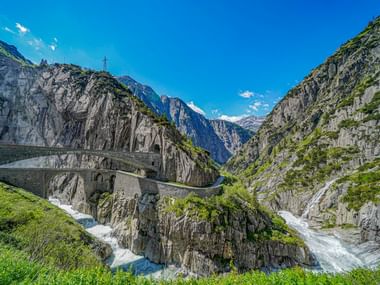
The Devil’s Bridge in Andermatt
Short & Sweet: The Rhône Cycle Route
- Length
approx 350 km - Topography
Basically flat and very easy to cycle. Those who want to, tackle the challenge Furkapass, all others start leisurely in Oberwald. Between Geneva and Lyon there are few longer climbs. - Signposting
In Switzerland, signs of the so-called Rhône Route, the Veloroute 1, lead from Andermatt to Geneva and further to the French border. From the French border onwards, signs with the Via Rhôna logo, a white star on a green background, and the route number 60, will be successively erected. At the end of 2018, 70% of the route was already signposted, with completion planned by 2020. - Quality
The mostly asphalt surface is only occasionally interrupted by gravel roads and short sections on dirt roads.
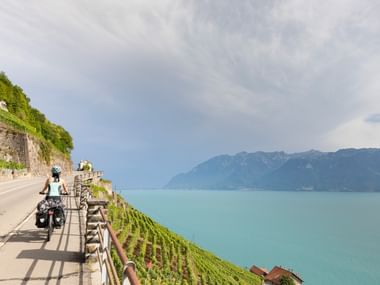
A cyclist near Espesses on Lake Geneva
Travel season
In spring, early summer and autumn you'll generally find the best conditions for a tour on the Rhône Cycle Route.
Less recommended, however, are the months of July, August and the first half of September. In this time it is very hot in the south of France. In addition, all of France is in the summer vacations, so that it is very busy on the bike paths. Also, beware of the mosquitoes that swarm in the Camargue during the hot summer months!
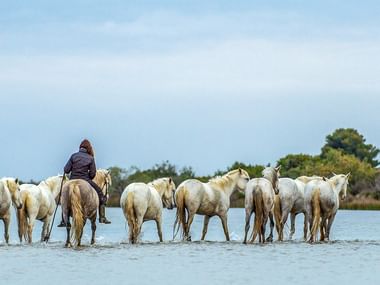
Horses by the sea in the Camargue
Getting there
With the German Railways and SBB, both Andermatt and Geneva are easily accessible, whether via Lindau or Zurich. Just inform yourself in good time about the possibilities of taking bicycles on the trains! Often a prior reservation is necessary and useful.
Lyon and Orange are easy to reach by TGV from Germany. The bicycle entrainment in French long-distance trains often proves to be difficult and requires early booking.
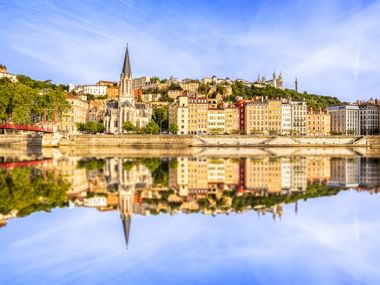
A view of Lyon
Shortcuts
If your legs are tired or the weather doesn't cooperate, you can easily bridge or combine all sections by train in Switzerland or by boat on Lake Geneva. In France, shortening sections or entire day trips with the regional train is no problem.
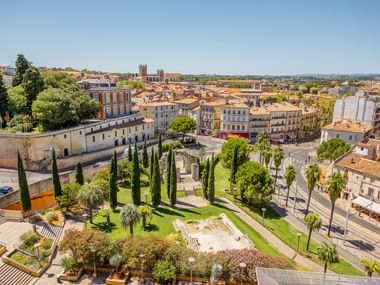
A view of Montpellier
For whom is the Rhône Cycle Route suitable?
For beginners and recreational cyclists, the Rhône Cycle Route is ideally suited. Families with children will also have their fun. The nice villages and bathing possibilities along the way do not let boredom arise. The bike paths are very well signposted and the road surface is excellent, so that no one breaks a sweat either in orientation or because of the condition.
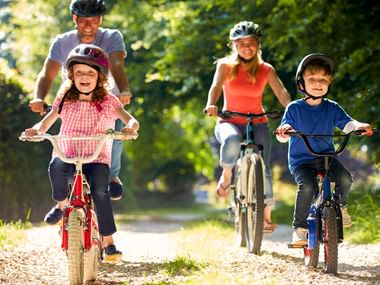
Family bike tour on the Rhône Cycle Route
Frequently asked questions about the Rhône Cycle Route